Fine-Tuning a Lightweight LLM for Verilog Code Generation
Tue Dec 02 2025
Overview
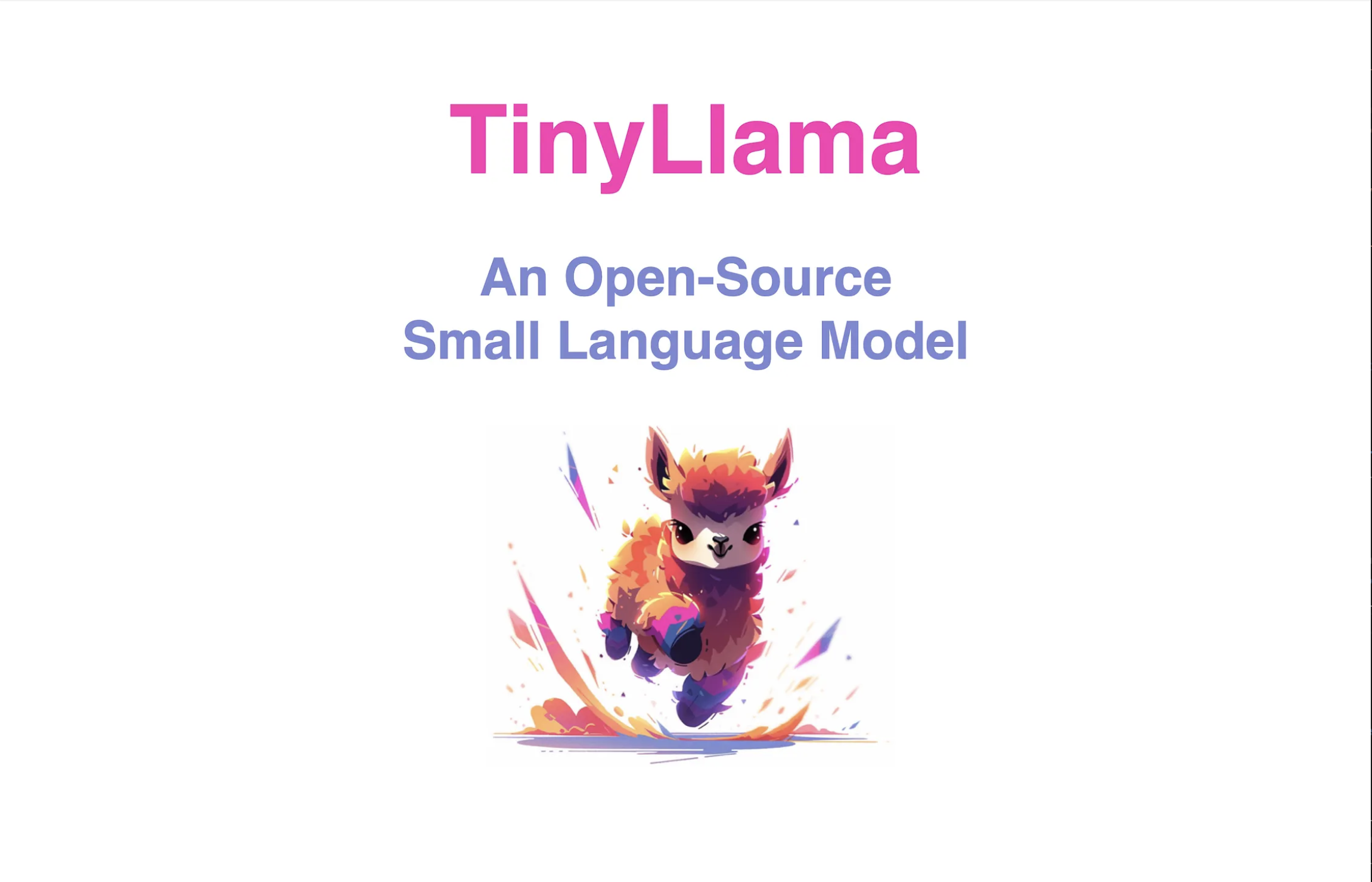
This project evaluates how well a small open-source language model can generate syntactically valid and synthesizable Verilog, then improves its performance through LoRA fine-tuning.
We benchmarked TinyLlama-1.1B on a set of Verilog generation tasks, applied lightweight fine-tuning using LoRA adapters, and re-evaluated the model using industry-standard HDL tools.
The goal was not to build a perfect HDL generator, but to explore whether small, locally-runnable models can meaningfully assist in digital design workflows.
My Role
This was a graduate project completed collaboratively.
I was responsible for:
- Designing the evaluation pipeline
- Implementing the HDL validation checks
- Writing the LoRA fine-tuning and generation scripts
- Running and analyzing all experiments
I did not rely on cloud-hosted models; all work was done locally.
Evaluation Pipeline
For each Verilog generation task, the pipeline performs:
- Model generation from a structured prompt
- Static checks
- Verible (syntax + formatting)
- Verilator (compile / lint)
- Yosys (read + synth)
- Functional sanity checks
- Auto-generated randomized testbenches
- Simulation with Icarus Verilog
All results are logged automatically to CSV summaries.
Fine-Tuning Approach
We fine-tuned TinyLlama using LoRA adapters via Hugging Face Transformers and PEFT:
- Base model: TinyLlama-1.1B
- Training set: ~30 small HDL examples
- Training: local GPU, short runs
- Goal: improve syntactic and structural correctness
The same evaluation pipeline was run before and after fine-tuning.
Results
Fine-tuning produced consistent improvements across all metrics:
- Verible syntax pass rate: 54.5% → 95.5%
- Verilator compile: 50.0% → 81.8%
- Yosys synth: 54.5% → 81.8%
- Testbench execution: 59.1% → 81.8%
Despite the small training set, the model showed clear gains in generating valid Verilog.
Tools & Technologies
- Verilog / SystemVerilog
- Python
- Hugging Face Transformers
- PEFT / LoRA
- Verible
- Verilator
- Yosys
- Icarus Verilog
Why This Project Matters
This project sits at the intersection of digital hardware design and applied machine learning.
It demonstrates:
- How HDL generation can be evaluated rigorously, not just by syntax
- That even small models can be meaningfully improved
- A realistic, tool-driven approach to ML-assisted hardware design
This work deepened my interest in design automation, verification, and ML-assisted EDA workflows.